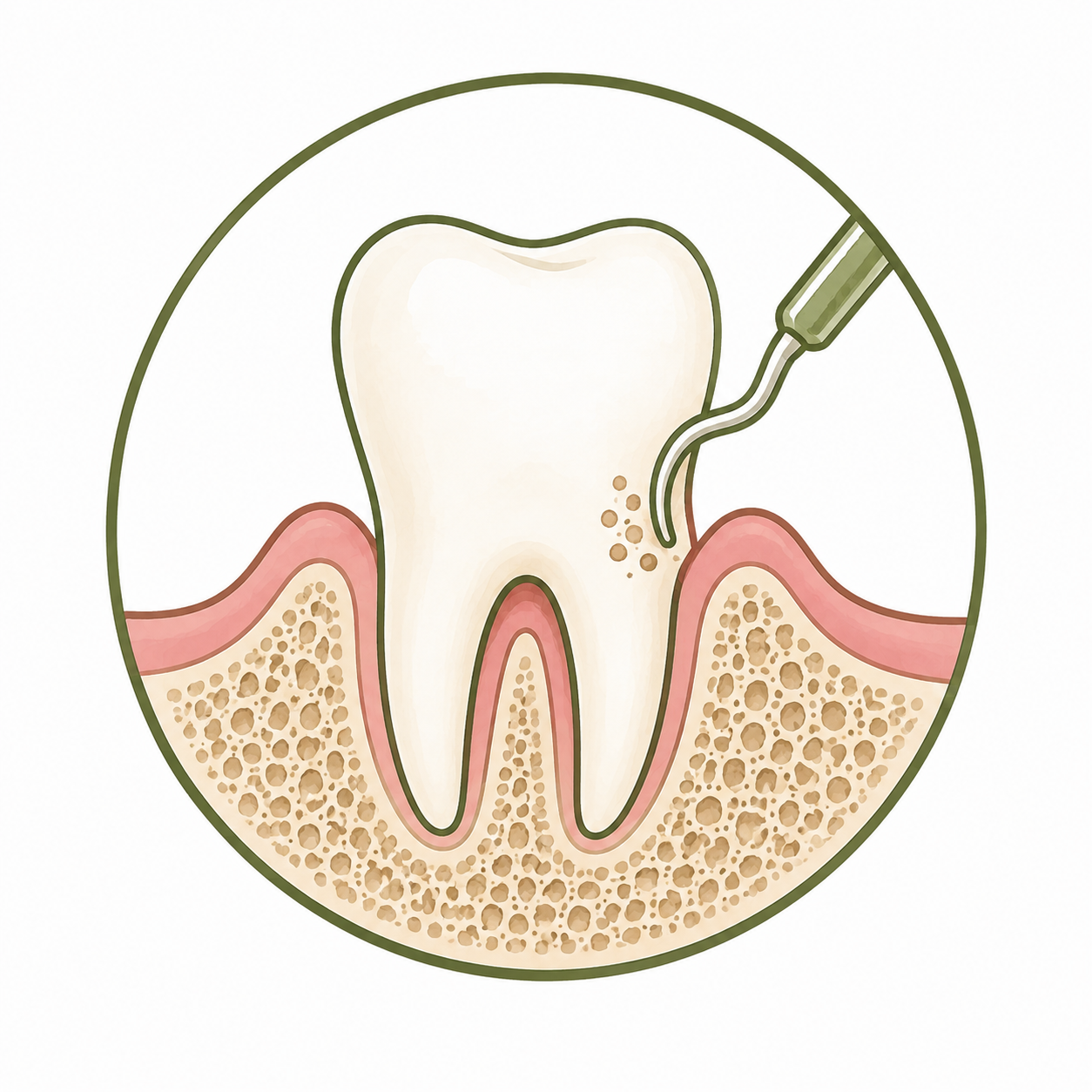
Diagnosis
Treatment begins by understanding what is present and how the condition affects the supporting tissues.
 Call to Schedule
Periodontal therapy
Periodontal therapy is individualized care focused on diagnosing, managing, and helping prevent the progression of gum disease.
Periodontal health
Periodontal health involves the gums and supporting structures around the teeth. These tissues help protect and stabilize the teeth over time.
Periodontal disease can progress differently from person to person. Appropriate care begins with evaluation and diagnosis rather than a one-size-fits-all treatment.
Personalized diagnosis
A clinical examination, periodontal measurements, health history, and appropriate imaging can help establish a clear picture of the condition.
Clear recommendations and conservative treatment when appropriate allow patients to understand their options and why a particular sequence may be advised.
A prevention-first approach
Periodontal care is centered on diagnosis, disease management, prevention, and long-term stability—not a single universal procedure.
Treatment begins by understanding what is present and how the condition affects the supporting tissues.
The approach is selected around disease severity, oral health, and individual needs.
Home care and professional support focus on protecting healthy areas and reducing future progression.
Ongoing periodontal care helps monitor stability and respond to changes over time.
Connected care
Periodontal health can influence dental implant planning, restorative treatment, soft-tissue procedures, and long-term maintenance. That connection does not mean every patient needs surgery; recommendations follow the diagnosis and individual response to care.
Specialty periodontal care is provided in Newtown for patients throughout Bucks County, Greater Philadelphia, and the surrounding PA–NJ region.
What to expect
Periodontal care often continues beyond a single procedure or visit.
We review concerns, health history, the gums, supporting structures, and relevant restorative needs.
Clinical findings are considered together to understand the type and extent of the condition.
Care is selected according to the diagnosis and the needs of the individual patient.
The response to treatment is reviewed and next steps are considered.
An individualized professional-care interval supports long-term periodontal stability.
Periodontal therapy FAQ
Periodontal disease affects the gums and other structures supporting the teeth. Its type, extent, and progression can vary from person to person.
Bleeding, swelling, tenderness, persistent bad breath, recession, tooth movement, or changes in how the teeth fit together can warrant evaluation, although disease can also be present without obvious symptoms.
Diagnosis may include a clinical examination, periodontal measurements, review of health history, and appropriate imaging.
No. Treatment depends on the diagnosis, severity, response to previous care, and individual needs. Surgery is considered only when indicated.
Many periodontal conditions can be managed through appropriate treatment, home care, reevaluation, and ongoing professional maintenance.
Maintenance helps monitor tissue health, control contributing factors, and identify changes that may require attention.
The appropriate interval depends on disease status, treatment response, risk factors, home care, and individual needs.
It starts with you
An evaluation can help you understand your periodontal health, available options, and appropriate next steps.
638 Newtown Yardley Road